Battery Jumpstart Service in Queens, NY
Dead battery anywhere in Queens. Heavy-duty 2,000-amp truck-mounted packs that crank V8s, diesels, and stubborn cold-soaked engines other consumer packs give up on. Alternator output verified at the curb before you drive off.
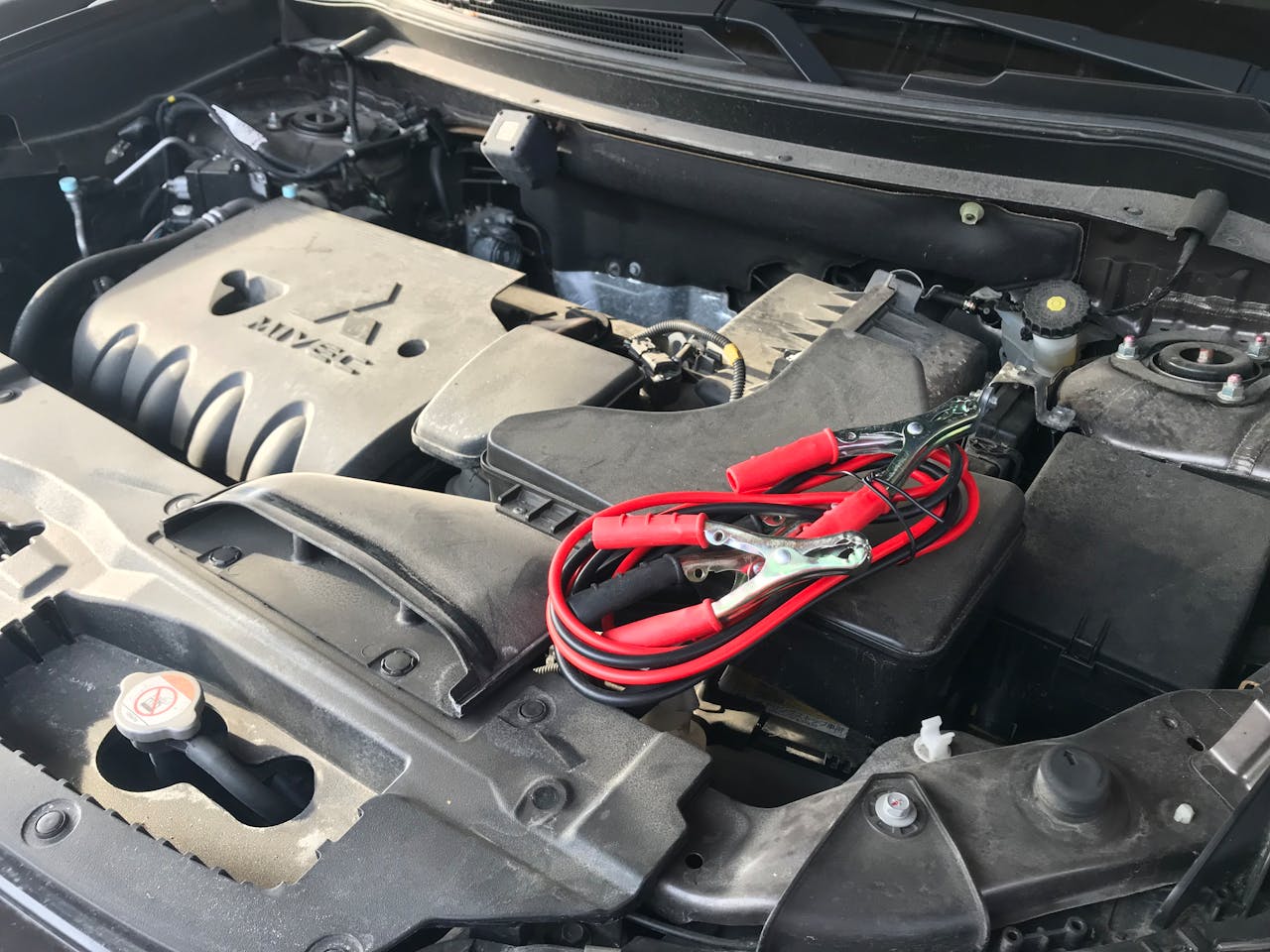
What a real jumpstart looks like
Most "jumpstart" calls in Queens are answered by an operator with a $89 consumer pocket pack rated for "1,500 peak amps" — a number that's true for about half a second before voltage sags and the cranking output collapses. That works on a healthy 1.8L four-cylinder with a moderately discharged battery. It does not work on a Tahoe with a 5.3L V8, a Ram with a Hemi, or any diesel — those need real sustained current, and the 1.8 lb pocket pack can't deliver it.
Our trucks carry truck-mounted 2,000-amp boost packs powered by deep-cycle marine batteries, with proper 4-gauge cables and copper clamps. The pack delivers sustained 800-1,200 amps long enough to crank any gasoline engine under 8.0L and most diesels. The connection is the manufacturer's designated jump point — under the hood for most cars, in the trunk for BMW and Mercedes models with the battery in the back, at a remote stud for some Audis and Porsches.
What it costs
Jumpstart is $50 flat anywhere in Queens. No mileage charge, no fuel surcharge, no "after-hours" markup at 3 AM. The price covers the truck dispatch, the jump itself, and a multimeter check on the alternator output before you drive off. If the alternator is reading low and you decide to be towed instead of risking a second breakdown, the $50 jumpstart fee is credited toward the tow.
Insurance roadside coverage usually covers a jumpstart in full — Geico, Allstate, State Farm, Progressive, USAA, and AAA all have it built in to standard policies or as a cheap add-on. We direct-bill if you have it; you authorize on the call.
Why batteries die in cold weather
The chemistry inside a lead-acid battery — sulfuric acid reacting with lead plates to release electrons — slows dramatically as temperature drops. The numbers are unforgiving. At 80°F a healthy battery delivers 100% of its rated cranking amps. At 32°F that's down to about 65%. At 0°F you're at 40%. At -10°F (Queens sees this maybe twice a winter on the coldest morning) you're down to 30%, and a battery that's already aging is functionally useless.
At the same time the engine is harder to crank because cold motor oil is thicker — a 5W-30 at 0°F is closer in viscosity to honey than to motor oil. So the battery is asked to deliver less while the engine demands more. November through March is when our jumpstart call volume runs three to five times the summer baseline. The two big spike days every winter are the first hard freeze of the season (catches owners by surprise) and the morning after a multi-day cold snap (batteries that limped through the first night give up on the second).
Why cheap consumer packs fail on big engines
The "2,000 peak amp" rating on a $79 Costco pocket pack is a marketing number. It's the maximum current the unit can deliver for a fraction of a second before voltage sags. Sustained cranking — the 3 to 6 seconds it actually takes a cold engine to start — needs sustained current. A V8 cranking on a cold morning pulls 600-800 amps continuously for several seconds. A diesel can pull 1,200-1,500 amps. The pocket pack runs out of voltage and shuts down before the engine fires.
Add reality factors: most pocket packs are themselves partially discharged because nobody charges them religiously. Their lithium cells lose capacity faster in the cold. Their 6-gauge clamps add resistance. The 12V cigarette-lighter port on the donor car (if you're trying to "trickle jump") delivers maybe 10 amps. None of it adds up to enough current to crank a cold Hemi.
The alternator check — and why it matters
The single most useful service in a jumpstart visit happens after the engine starts. The driver puts a multimeter across the battery terminals with the engine running and reads the voltage. Healthy alternator output is 13.7V to 14.7V. If it reads under 13.5V, the alternator is either failing internally or the drive belt is slipping. Either way, your battery will discharge again as soon as the engine is off, and you'll be stranded again — usually within hours, often before you get home.
We tell you the number on the spot. If it's a charging-system failure, the right move is a tow directly to a shop (your usual mechanic, the dealer, or somewhere in the neighborhood) — not driving and hoping. The $50 jumpstart fee is credited to the tow if you make that decision on scene. We've watched too many owners get jumped, drive off, and end up calling back two hours later for a tow. Better to know upfront.
Battery age and end-of-life signs
Lead-acid batteries in NYC's climate last roughly 4 to 6 years. The hot summers in particular cook them — sustained 90°F+ days accelerate the chemical degradation. Signs your battery is at the end:
- Slow cranking when the engine is warm. If a hot-start sounds labored, the battery isn't holding charge.
- Dim headlights at idle. Watch them in your rearview when you start — if they sag noticeably and recover slowly, charge capacity is low.
- Battery dashboard light. Stays on after start = charging system failure. Comes on briefly under load = aging battery.
- Swollen battery case. Bulging sides mean internal damage from heat or overcharging — replace immediately.
- Heavy corrosion on terminals. Green or white powder around the clamps. Clean it, but it's also a sign of overcharging from a failing voltage regulator.
- Engine struggles to start after a 12-hour overnight sit. A healthy battery starts a healthy engine after a week unused. If overnight is killing you, replacement is overdue.
- Date code 4+ years old. Stamped on the case or sticker. After 4 years in NYC weather, a battery is on borrowed time.
Common Queens jumpstart scenarios
Forest Hills cold-soaked Honda after a snowstorm
Winter calls along Continental Ave, Ascan Ave, and the side streets off Queens Blvd peak between 6:30 AM and 9:00 AM on the coldest days. Owner walks out, turns the key, hears a click or a slow grind, calls us. We arrive, jump the car, check the alternator, and 80% of the time the answer is "battery is at end of life, replace it this week, here's a couple of shops on Queens Blvd that can do it tomorrow." The other 20% is a deeper issue — bad alternator, parasitic drain, or a starter on its way out.
Northern Blvd parking lot, Sunday afternoon
Costco, Home Depot, Target, supermarket lots along Northern Blvd in Flushing and Bayside generate steady weekend jumpstart traffic. Owner left the dome light on, or the rear hatch ajar, or kids in the back seat watching the rear entertainment system with the engine off. Battery's flat, car won't even click. Five-minute jump, alternator usually reads fine because it's a healthy battery just drained, owner drives home, no further issue.
Diesel Sprinter or Transit on the LIE service road
Commercial vans dying on the LIE service road in Maspeth, Elmhurst, or Jackson Heights are a regular call. The fleet batteries are often two batteries wired in parallel for higher cranking capacity, and one of them is dead. Pocket packs from the parts store have zero chance. Our 2,000-amp pack handles it. We test alternator output and check both batteries — if one is bad and the other is good, the bad one needs replacement before it pulls the good one down.
Hybrid that won't power up at all
Prius, Camry Hybrid, RAV4 Hybrid, Highlander Hybrid, Lexus hybrids — they all have a small 12V AGM battery (separate from the high-voltage hybrid pack) that runs the computers, locks, and dash. When the 12V dies, the car appears completely dead — won't unlock with the fob, won't power on, dashboard is dark. Owners assume it's a catastrophic hybrid failure. It's almost always just the 12V. We jump the 12V at its designated terminal under the hood, the system wakes up, the high-voltage hybrid takes over and recharges the 12V from there.
What you can do before we arrive
- Make sure all electrical accessories are off. Headlights, interior lights, radio, climate fan, rear defroster — all off. Reduces the load when the jump is connected.
- Locate the jump points. Most modern cars have under-hood positive and ground points marked with a + symbol or red plastic cap. BMW and Mercedes models often hide the battery in the trunk and have a remote positive stud under the hood — owner's manual confirms.
- Have the key in the ignition / fob in the cabin. Some keyless cars need the fob detected before the engine cranks even with full battery voltage.
- Don't try to jump it yourself with another car. Reversed clamps cause serious damage on modern cars — fried body control modules, blown fuses, dealer reprogramming bills. If you're not 100% sure of polarity, wait for the truck.
Battery Jumpstart Questions
Why does my battery die more often in winter?
Lead-acid battery chemistry slows down as temperature drops. At 32°F a healthy battery delivers about 65% of its rated cranking amps. At 0°F it's down to roughly 40%. The same battery that started fine in October may be unable to crank a cold V6 in January, especially if it's already 4+ years old.
Will a small consumer jump pack work on my truck?
Maybe on a small four-cylinder. Probably not on a V8, V6 turbo, or diesel — those need 700–1,200 cold cranking amps to spin over, and most consumer pocket packs deliver 400–600 amps peak. Diesels are even harder: a 6.7L Power Stroke or Cummins needs 1,500+ CCA. We carry 2,000-amp truck-mounted packs.
What's an alternator output check and why does it matter?
After the jump, with the engine running, we put a multimeter across the battery terminals. Healthy charging system reads 13.7 to 14.7 volts. Below 13.5V means the alternator is failing or the belt is slipping — your battery will discharge again as soon as you turn the engine off.
How can I tell if my battery is just old?
Check the date code stamped on the battery. A battery 4 years or older is at the end of its useful life in NY's temperature swings. Other signs: slow cranking when warm, dim headlights at idle, dashboard battery light, swollen case, terminal corrosion, struggling to start after sitting overnight.
When does a jump not work?
Battery internally shorted — won't accept charge. Starter motor or solenoid failed — engine won't crank with full voltage. Frozen battery — risk of cracking. Severely sulfated battery — accepts a tiny surface charge that dissipates instantly. In any of those cases the right call is a tow to a shop.
Can a jumpstart damage my car?
Done correctly, no. Done with reversed polarity, it can blow fuses, fry the alternator diodes, brick the body control module, and on some cars (BMW, Mercedes, Audi) cause thousands in dealer reprogramming. We use color-coded clamps with insulated handles and verify polarity before clamping.
Do you charge extra for hybrids or EVs?
Hybrids: same $50 flat. The 12V auxiliary battery in a Prius, RAV4 Hybrid, Camry Hybrid is a small AGM that runs the computers — when it dies the car won't power up at all. EVs: also same $50 — every EV has a 12V battery for the same purpose.
Is it safe to drive after a jump?
Depends on what killed the battery. If it's a healthy battery drained by leaving a light on, or a 4+ year old battery near end of life, drive directly to home or a shop. If the alternator is failing or there's a parasitic drain, the battery will be dead again before you make it back. Our alternator check tells us which.
Other Services
24 Hour Emergency Towing
If the jump won't hold or alternator is bad. From $75.
Flatbed Towing
For AWD/EV that needs to go to the shop. From $95.
Car Lockout
Locked out at the same time? Combo discount. $55 flat.
Flat Tire Change
Spare swap or tow to tire shop. $55 + parts.
Fuel Delivery
Gas brought to your stranded vehicle. $65 + fuel.
Roadside Assistance
Full menu — jump, lockout, tire, fuel. Per service.