Accident Recovery in Queens, NY
After NYPD clears the scene, we recover your vehicle and deliver it to your body shop, dealer, or storage of choice. Condition photos at intake, direct insurance billing for major carriers. We come when called — never uninvited.
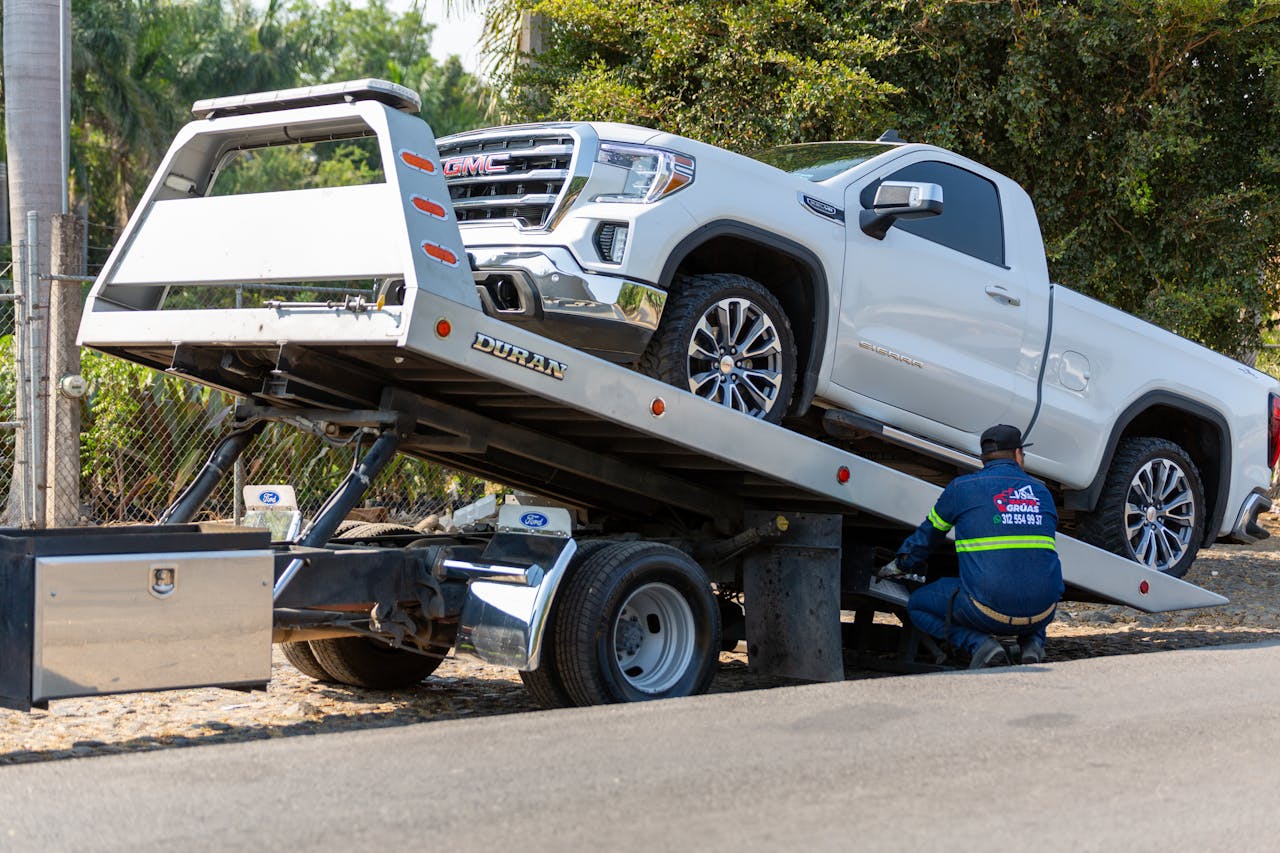
How accident recovery works in NYC
Most New York drivers don't know they have a choice in who tows their car after an accident. The default flow at most NYC accident scenes goes like this: NYPD arrives, assesses the situation, takes statements, and dispatches a "rotation tow" — a city-contracted operator on a rotating list. That rotation tow takes the vehicle to a city-contracted impound yard, where storage fees stack up daily and getting it released to your body shop becomes a paperwork ordeal.
You don't have to do that. NYC drivers have the explicit right to choose their own tow operator and destination after an accident, as long as the vehicle is safely off the roadway. You can ask NYPD to delay rotation dispatch while you call your preferred operator. NYPD will accommodate that request in most cases — they don't actually want to call rotation if they don't have to; it's just the default when nobody specifies otherwise.
That's where we come in. Call us, give us the cross-streets, give us the carrier and policy info, and the closest available truck rolls. We arrive after NYPD has cleared the vehicle to be moved (we never enter an active scene), document condition with photos, load the vehicle, and deliver to whatever destination you specify — your usual body shop, your dealer, your house, or our yard for overnight storage if you need time to think.
What it costs
Accident recovery starts at $125 hookup for a standard scene — vehicle is upright, driveable to a load point or rolls onto a flatbed cleanly, no exotic equipment needed. The $125 covers scene staging, condition photos, loading, transport to the destination within Queens (with the standard $4/loaded-mile beyond hookup distance), and unloading.
Complex recovery — vehicle on its side, vehicle off the roadway requiring winching, vehicle stuck against a barrier, vehicle in a position where access is restricted — is scene-quoted before any equipment moves. The driver assesses, calls dispatch with the situation, and you (or your insurance carrier) get a firm number for the additional work. Typical scene-quoted complexity adds $100-$400 depending on what's needed.
Long-distance accident recovery (delivery to a body shop in NJ, CT, upstate NY, etc.) follows long-distance pricing — $4/mile with hookup waived at 50+ miles. Insurance carriers usually cover this without question.
The condition documentation process
Before the vehicle is loaded onto the flatbed, the driver photographs every panel and every visible damage point. Standard sequence:
- Front three-quarter view from driver and passenger sides.
- Rear three-quarter view from driver and passenger sides.
- Direct front, direct rear, both side profiles.
- Each wheel and tire individually — to document existing damage versus tow-related damage later.
- Close-ups of every visible damage location — bumper damage, fender damage, door damage, glass damage, lighting damage.
- Interior overview — driver's seat area, passenger seat area, rear seat area, cargo area.
- Odometer and dashboard photo to document the mileage at intake.
- VIN photo (driver-side door jamb sticker) for insurance verification.
Photos are taken with timestamps and GPS metadata enabled, and we send them to you by text within 30 minutes of pickup. The body shop receives the same photo set when we deliver. The insurance adjuster gets them on request.
Why this matters: post-tow disputes about who caused which damage are surprisingly common. A scratch on a wheel that the body shop attributes to the tow operator. A dent on a panel that the insurance adjuster says wasn't in the original accident report. Without timestamped intake photos, those disputes are he-said/she-said and customers usually lose. With photos, the answer is documented.
Direct insurance billing
For most major carriers, we can submit the bill directly to your insurance rather than asking you to pay and seek reimbursement. Carriers we routinely direct-bill:
- Geico, Allstate, State Farm, Progressive, USAA, Liberty Mutual, Travelers, Nationwide, Erie, Mercury, Plymouth Rock, NJM (NJ-only).
- AAA, Better World Club for member roadside coverage.
- Manufacturer roadside programs: Honda Care, Toyota Care, Ford Roadside Assistance, GM (Chevy/Buick/GMC/Cadillac), Tesla, Subaru, Hyundai/Kia, BMW, Audi, Mercedes.
- Most extended warranties that include roadside (Endurance, CarShield, etc.) as long as the warranty covers towing for the specific situation.
The flow on the call: you give us the carrier name and policy/claim number, we contact the carrier or their tow authorization line to get a confirmation number, and the carrier pays us directly afterward. You don't pay out of pocket. The only common exception is when the carrier requires you to use their preferred network operator — in that case we recommend you check whether the network operator's response time is acceptable, and if not, you pay us and submit for reimbursement.
Choosing where the vehicle goes
You decide the destination, not us. Common choices:
Your insurance carrier's network body shop
Carriers maintain agreements with specific body shops at pre-negotiated rates. Going network often means a guaranteed-quality repair, a lifetime warranty on the work, and the carrier handling the paperwork directly. Faster and lower out-of-pocket on most claims. Network shops in Queens are concentrated along Northern Blvd, Atlantic Ave, and the Long Island Expressway service road.
Your dealer's body shop
Many dealers have in-house body shops or partnerships with certified collision centers — Honda, Toyota, Ford, GM, BMW, Mercedes, and Tesla all have certified body shop networks. Going to the dealer can be the right call for newer vehicles still under warranty, leased vehicles where the dealer wants to handle the work directly, or luxury cars where the dealer's tools and parts supply matter. Insurance still pays whether you go network or dealer; some carriers add a small surcharge for off-network choice.
An independent shop you trust
If you have a body shop you've used before and trust, you can direct the tow there. Insurance pays the same regardless of where the work is done (subject to network discounts), and your right to choose is protected by NY state law. The only catch is the carrier's adjuster will inspect the vehicle at the shop's location, which means scheduling — not a problem in practice.
Your home or our yard for overnight
If you need a day or two to figure out where the car should go (insurance hasn't called back yet, you want to get a few quotes, you're waiting on family input), we deliver to your home (driveway, parking lot, or street) or to our Forest Hills yard for $25/day storage. No pressure to make a snap decision.
Body shop steering — and how to avoid it
"Steering" is the practice of pressuring or manipulating accident victims to use a specific body shop, usually one that pays the tow operator a kickback. It's illegal in NY and the NYC Department of Consumer Affairs takes complaints seriously, but it still happens. Signs of steering:
- Tow driver insists "you have to take it to my shop" or "the only shop that can fix this is X."
- Pressure to sign paperwork at the scene authorizing the operator's preferred shop.
- Refusal to deliver to your specified destination.
- Surprise charges that magically disappear if you "just go to my shop."
- Tow driver showing up uninvited and offering to "help" with the body shop choice.
None of those happen on our trucks. You direct the destination on the call, the driver delivers there, you sign nothing at the scene beyond the standard work order, and the price is what was quoted on the call. If anyone tells you they "have to" take your car somewhere specific, they're either lying or commission-driven — call dispatch and we'll re-route.
Total-loss decisions in NY
Not every accident vehicle gets repaired. NY state allows insurance carriers to declare a "total loss" when the cost to repair plus the salvage value exceeds the actual cash value (ACV) of the vehicle before the accident. Practically this is the 70-80% threshold — repairs costing more than 70-80% of what the car was worth pre-accident often trigger total loss.
The flow: carrier sends an adjuster, adjuster inspects the vehicle (often at the body shop where we delivered), shops provide repair estimates, the carrier runs the numbers, and either authorizes repair or declares total loss. Total-loss vehicles go to the carrier's salvage processor (Copart, IAA, or similar auctions); you receive the ACV minus your deductible as a settlement check.
If you disagree with the ACV the carrier offered, you have the right to challenge it with comparable-vehicle data (recent sales of similar year/mileage/condition vehicles in your zip code), an independent appraisal, or by purchasing the vehicle back at salvage value and either repairing it yourself or scrapping it. Total-loss disputes are common; the carrier's first offer is rarely their best offer.
Common Queens accident recovery scenarios
Intersection collision on Queens Blvd
Queens Blvd has a long history of pedestrian and vehicle accidents — Woodhaven Blvd intersection, the College Point Blvd merge, the Yellowstone Blvd light. NYPD secures the scene, EMS handles injuries, then NYPD clears the vehicles to be moved. We arrive, photograph, load, and deliver to the body shop or storage you specify. Insurance handles the bill.
Atlantic Ave fender bender
Lower-impact accidents on Atlantic Ave through Richmond Hill and Ozone Park — bumper-to-bumper traffic causing slow-speed rear-ends. Often driveable, but sometimes the radiator or condenser is punctured and the car can't drive without overheating. Tow to your shop, photos document the damage clearly so insurance can't dispute later.
Northern Blvd at night
Late-night accidents on Northern Blvd through Flushing — visibility-related crashes, lane-change collisions, pedestrian incidents. Same flow: NYPD clears, we arrive, document, transport. Night work is the same price as daytime.
Cross Bay Blvd or Belt Parkway exit
Accidents in the Cross Bay/Belt area sometimes occur at the Belt service road — once the vehicle is off the parkway proper (which is a state-rotation tow situation if it's still on the parkway), we can recover from the service road or wherever it ended up.
What you can do at the scene
- Safety first. Get yourself and any passengers to a safe location away from traffic. If anyone is hurt, call 911 immediately — medical care is the only priority for the first few minutes.
- Photograph the scene yourself. Wide shots, close shots of all vehicles involved, license plates, road markings, traffic signals, weather conditions, witnesses if any. Insurance loves photos. Take 30-50 of them.
- Exchange information with other parties. Driver's license, registration, insurance card. Their phone number too if possible.
- Call your insurance carrier from the scene. Many carriers want a recorded call within 24 hours; doing it from the scene with everything fresh is best.
- Tell NYPD you'll arrange your own tow. "I'm calling my own operator" is the magic phrase that prevents rotation dispatch. Then call us.
- Don't admit fault. "I'm sorry" is interpreted as admission. Stick to facts — what happened, when, where, who. Let the adjusters figure out fault from evidence.
Accident Recovery Questions
Do I have to use the tow truck NYPD calls?
No. NYC drivers have the right to choose their own tow operator and destination after an accident, as long as the vehicle is safely off the roadway. NYPD will dispatch a rotation tow if you don't have one — but you can request a delay and call us instead.
Why do you photograph the vehicle before loading?
To document condition at intake — every panel, every visible damage point, the wheels, the interior. If anything is questioned later (body shop, insurance adjuster, dispute about transit damage), the timestamped photos answer the question. We send them to you by text.
Can you bill my insurance directly?
Yes for most major carriers — Geico, Allstate, State Farm, Progressive, USAA, AAA, Liberty Mutual, Travelers, Nationwide. We also direct-bill manufacturer roadside programs. On the call, you authorize us to contact your carrier and the bill goes to them rather than you.
Do you chase accidents?
No. Showing up at an accident scene uninvited is illegal in NYC and we don't do it. Some operators monitor police scanners and aggressively solicit business — that practice is heavily regulated. We come when you call us. If you don't have a tow company in mind, ask NYPD to delay rotation while you call.
How does choosing a body shop work?
You choose. Your insurance carrier will recommend a network shop, and going network is often faster — but you are not required to use a network shop. You can use your dealer, a specialist, or a shop you've used before. The right to choose is yours.
What's a total-loss decision and when does it apply?
NY state allows insurance carriers to declare a vehicle a total loss when the cost to repair plus the salvage value exceeds the actual cash value (ACV) — practically, when repairs would cost 70-80% of what the car was worth. Total-loss vehicles go to the carrier's salvage processor; you receive the ACV less your deductible.
What if I'm hurt at the scene?
Medical care first, always. NYPD and FDNY/EMS handle the scene; the tow happens after. If you're being transported to a hospital, have a family member or friend call us with the location and your insurance information; we coordinate from there.
What does the price include?
From $125 for a standard accident-recovery tow. Includes scene staging, condition photos, loading the vehicle, transport to your chosen destination within Queens, and unloading. Long-distance recovery follows long-distance pricing. Complex recovery is scene-quoted.
Other Services
24 Hour Emergency Towing
Round-the-clock dispatch for any disabled vehicle. From $75.
Flatbed Towing
Required for damaged or AWD vehicles. From $95.
Long Distance Towing
Cross-state delivery to your shop. $4/mile.
Motorcycle Towing
Crashed bike recovery, NYPD-cleared. From $110.
Battery Jumpstart
If the only damage was a dead battery. $50 flat.
Roadside Assistance
Full menu of roadside services. Per service.